Witness
A visit to Donald Morrison. a chief witness in the case of Willie McRae

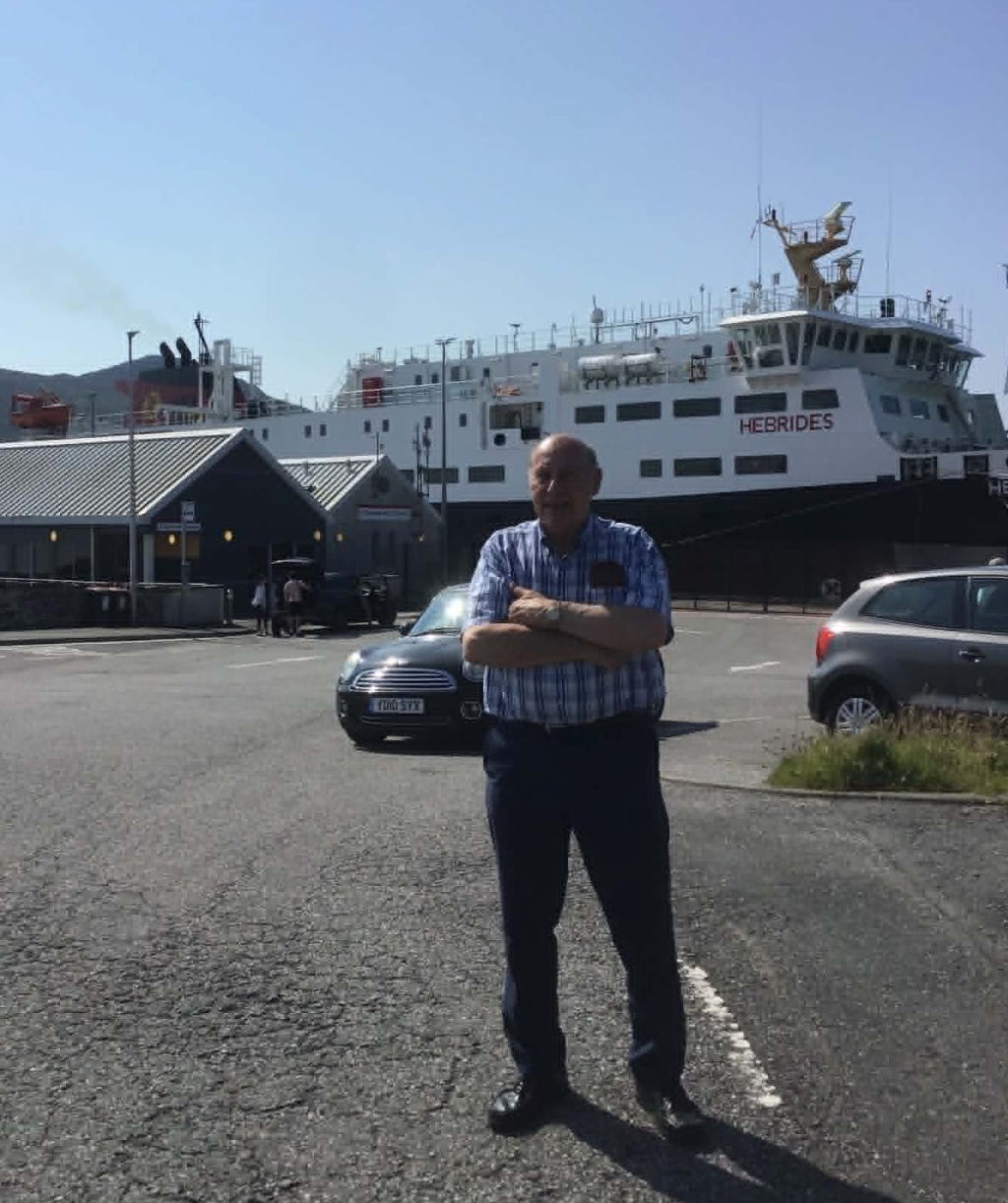
I took a trip to Benbecula to visit Donald Morrison, a chief witness in the case of Willie McRae, a prominent Scottish lawyer who was found dying of a bullet wound in a car that had gone off the road in 1985.
Donald was the last person to see Willie McRae alive and whenever I have spoken to him on the phone about this, he has always urged me to visit. The case has been bugging me and so eventually I decided to take him up on the invitation.
I drove round the single-track roads from Wester Ross to Skye on a brief interlude when the north west Highlands was experiencing a bit of the heat wave we hear so much about. En route, instead of listening to the radio, I chewed over the story.
McRae was an SNP politician, activist-lawyer and anti-nuclear campaigner. On a misty April night 41 years ago, his car went off a quiet road - it must have been going at speed - and came to rest 90 feet away. It was spotted by an eagle-eyed accident investigator and his wife the next morning at ten am. They glimpsed the car, which was partially hidden by a gully, turned back to check on it and found Willie unconscious but still breathing.
Neither they nor the other passers-by they flagged down, who included a doctor, nor the paramedics, nor the nurses who received McRae at the hospital noticed a bullet wound. However, an MRI scan after McRae was transferred to Raigmore revealed that he had been shot.
The authorities later said that McRae had committed suicide by shooting himself in the temple. But it seems unbelievable that all of the professionals who cared for him would have failed to wash the blood away and see a bullet wound if it was in his temple.
A nurse who treated McRae came forward later and said that there was a small entry wound under the hairline at the back of his neck. This is much more consistent with an attempted covert murder than suicide.
Arriving at Uig terminal, it took longer than expected to find a parking spot for the car. I had originally planned to take the car over on the boat to Lochmaddy but it was full for cars and Donald had offered to collect me, so I was going over on foot.
As I walked to the ticket office, I reflected that whoever shot McRae might have reasonably expected him to be dead when he was found. Had McRae been dead, his body would have gone straight to the morgue. It is very unlikely that an autopsy on someone whose car had been found so far off the road would have included an X-ray. The most likely outcome would have been that his death would have been put down to trauma injuries from the crash.
There is a covered walkway for foot passengers at the brand-new terminal - but some panels blew off in the winter and apparently there is a stand-off about fixing it between Highland Council and their contractors. In the meantime, Cal Mac takes the foot passengers down on a minibus. I had missed the first bus run and was getting anxious about missing the boat, as check-in had supposedly closed much earlier. I need not have worried. A white-haired man with a ruddy complexion arrived only minutes before departure and was calmly sold a ticket. On the bus down to the ferry he greeted a neighbour in Gaelic; she replied in Glasgow-accented English.
Watching the minibus reverse down the gangplank into the ferry's hold made me glad I wasn't taking the car across. The belly of the boat was packed with freight lorries and enormous motorhomes festooned with bikes and kayaks, while the wail of car alarms echoed around its steel hull.
On the crossing, the Atlantic shimmered in an azure haze and the Hebs looked like stand-ins for the South Sea islands. I stood on the deck, stretching my legs after a long drive by doing some Tai Chi, while watching the ferry crew take advantage of the dry weather to touch up the foredeck’s green paint.
Donald met me at the other end. He and the last-arriving passenger had a brief interchange in Gaelic. We drove to the three-bedroom bungalow that Donald shared with his wife Mary until her death from dementia last year. Donald and Mary, who were unable to have a family due to what sounded like an ectopic pregnancy early in their marriage, were very close and he misses her deeply.
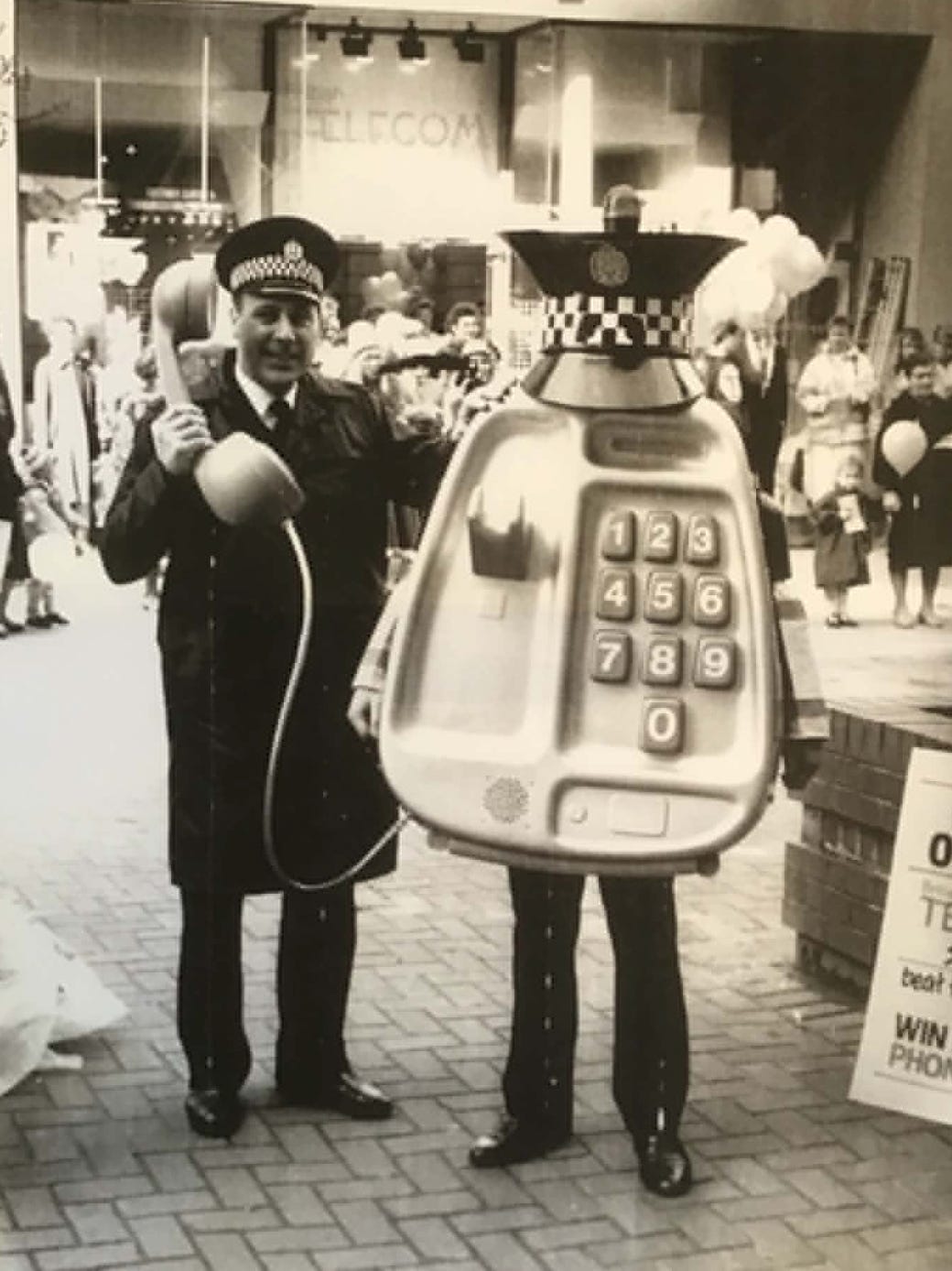
After a bit of general chat, we turned to the case. In the early 1980s Donald was a beat policeman who walked the streets of the centre of Glasgow, sometimes chatting in Gaelic to other Highland cops. He had frequent interactions back then with McRae, because of a series of break-ins at his office
( Here is some audio of me interviewing Donald about the break-ins, which I recorded the following morning).
We went for an early dinner at Charlie’s Bistro, which was busy with a large American group of tourists, but they found a table for us in the corner. We both had the chicken curry washed down with a bottle of Sauvignon Blanc - but I drank most of it. When I went to quietly settle the bill, I was too late as Donald had already taken care of it.
It felt a bit late after that to do more interviewing. I went for a stroll and clambered down past some rusty cars in an old parking lot to the seashore. Four boys in swimming trunks were picking their way along the rocks, while an adult nearby seemed to be fishing.
The next morning, over breakfast of tea and toast, I recorded Donald telling me about the day he saw McRae leave Glasgow, aggressively tailed by two unmarked vehicles. Even at the time, Donald was concerned for McRae.
(At the start of this audio, Donald answers the phone and talks in Gaelic for a couple of minutes. )
When he heard of McRae’s death, Donald was convinced it was suspicious. He was angry and disturbed and considered leaving the police force. But he was advised, by Mary and also by the Glasgow criminal lawyer Joe Beltrami, who he played bowls with, to stay put and say nothing.
Donald played his cards close to his chest for many years. But he noted that from then on he was treated differently within the police. He didn’t get the commendations he expected for difficult and dangerous arrests. After applying for an advanced passenger vehicle driving course in the mid-1990s, Donald was asked to go for a health check. He discovered from his doctor, who had an office next to the Special Branch office. that his medical records had been switched with those of another Uist policeman, Donald Archie Morrison, who had a drink problem. The doctor was angry and could not explain how this had happened - the two men had different NI numbers and dates of birth. Donald thought it had been done as a way to discredit him in case he went public with what he knew. Meanwhile, Donald Archie, with the wrong health records, was promoted to the Special Crime Squad. (Audio below)
After a rise in interest in the McRae case around the 30th anniversary, Donald contributed £700 to a privately funded investigation called “Justice for Willie”. Donald expected the work to be handled by lawyers - when he heard it was being conducted by two former police detectives that he considers to have links to Special Branch, he lost faith in the inquiry. In 2016, it concluded that Donald’s evidence was not credible, there was no evidence of surveillance and that McRae had killed himself.
Two years later, in 2018, the nurse who looked after McRae, Katharine McGonigal stated that the bullet entry wound was under his hairline.
In 2021, Pat Gallagher came forward to say that he had rescued McRae from a fire in his apartment the day before. He saw a man running from the stairwell carrying a case. Although he gave his details to police at the time, they never questioned him.
There was no fatal accident inquiry into the death of McRae. The post-mortem has never been released. Many key witnesses were never interviewed by police. The reason for the lack of official investigation is usually put down to the fact that McRae’s brother Fergus has always accepted the verdict of suicide. But that should not outweigh the public interest in justice.
One possible explanation that has been suggested for the lack of pressure to reopen the case concerns persistent rumours about McRae's personal life. I cannot verify that, but after my previous article I received an email from a lawyer whom I won’t name. He said that a young law student working weekends at the Levy and McRae office confided to him that McRae had physically abused him - forcing him to partially undress and beating him as "punishment" for a mistake - before warning him to stay silent and hinting that other young men from similar working-class Catholic backgrounds had faced the same treatment. The emailer said that he consulted his lawyer father, who advised the victim against exposing the abuse due to the potential consequences. But the emailer says that McRae was later ousted from the firm he co-founded, with no public explanation.
A burst tyre delayed McRae on that fateful journey north, to his holiday cottage in Kintail, so that he was travelling after dark on a lonely road. I don’t know who killed him or why - there are many speculative theories. I don’t know whether he was shot before or after his car left the road. But I don’t believe that he killed himself.
It is an extraordinary fact that McRae’s heart kept on beating until the next morning; that the Crowes spotted the car and went back to see if there was anyone in it; and that he lived long enough for an MRI scan to reveal a bullet wound. The most likely outcome, as I said at the start, is that his death would have been put down to the crash and we would never have known about the bullet.
It was not until many years later that Donald felt able to speak about what he saw the day McRae left Glasgow and about the series of break-ins and the tampering with McRae’s files that he witnessed. If Donald’s evidence is accurate, then it makes the suicide theory even harder to accept.
So who is Donald? How seriously should we take what he has consistently said? In my short visit, I heard a lot of stories about his life, not only about his involvement in the McRae case and the impact that has had on him. My favourite was about Jimmy the horse his family had when he was a child growing up on a croft in Uist. A neighbour’s horse had died, and he wanted to buy Jimmy, who was half Clydesdale and half Arab. He offered £40 which was a lot of money in those days. So Jimmy went off - but when Donald’s granny passed by him a few days later, tethered in a field, on her way to the shop, Jimmy pulled out his tether and followed her home.
Jimmy did something he had never done before; he ducked down and came into the house. The menfolk had to climb in by the kitchen window to back him out, because they couldn’t turn him round inside the cottage. Granny, who rule the roost, said that Jimmy was homesick and should be allowed to come home. The neighbour was happy with his end of the bargain though - he got his £40 back and was also told that whenever he needed a horse he could borrow Jimmy for the day.
This has nothing to do with McRae’s death - it just lets you see a bit about what Donald is like and what his values are. He is a Highland policeman of the old school. I found him to be a credible witness who knows what he saw and took his time before speaking out about it.
Here is a long read I wrote about the McRae case in 2023
Thanks for doing this, Jackie. On balance I no longer believe that he killed himself.
This is a fascinating read, thank-you. A lot chimes here from what I know from my time working at the SCRAM office - even though that was several years later, post Chernobyl.